

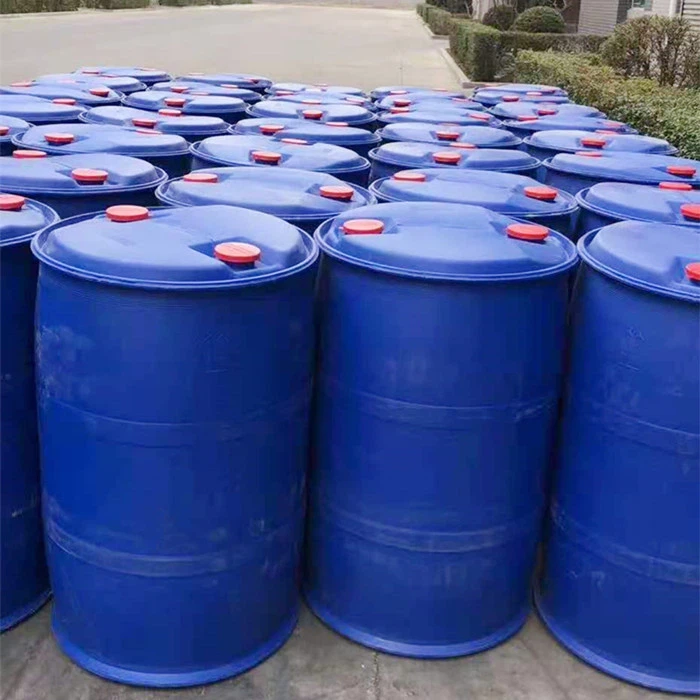
Hey there! As a supplier of 1,4 - Butanediol, I'm super stoked to chat with you about its chemical properties. 1,4 - Butanediol, often abbreviated as BDO, is a pretty cool organic compound with the molecular formula C₄H₁₀O₂. It's a colorless, viscous liquid at room temperature, and it's got a whole bunch of interesting chemical traits that make it useful in various industries.
Solubility and Hydrogen Bonding
First off, let's talk about solubility. 1,4 - Butanediol is highly soluble in water. Why? Well, it's all about those hydroxyl (-OH) groups at each end of the molecule. These hydroxyl groups can form hydrogen bonds with water molecules. Hydrogen bonding is like a super - sticky force between molecules. The oxygen in the -OH group of BDO has a partial negative charge, and the hydrogen in water has a partial positive charge. They attract each other, which allows BDO to dissolve easily in water. This solubility is super important in many applications, like in the production of water - based coatings and some types of adhesives.
It's also soluble in many organic solvents such as ethanol, acetone, and chloroform. This wide solubility range makes it a versatile ingredient in different chemical formulations. For example, in the pharmaceutical industry, this solubility can be used to create solutions for drug delivery systems.
Reactivity as an Alcohol
Since 1,4 - Butanediol has two hydroxyl groups, it behaves like a typical alcohol in many chemical reactions. One of the most common reactions is esterification. When BDO reacts with carboxylic acids in the presence of an acid catalyst, it forms esters. Esters are widely used in the fragrance and flavor industry. For instance, if BDO reacts with acetic acid, it forms an ester that might have a fruity smell. The reaction equation is something like this:
C₄H₁₀O₂ + CH₃COOH → CH₃COOC₄H₉O + H₂O
Another important reaction is dehydration. When BDO is heated with a strong acid catalyst, like sulfuric acid, it can lose a molecule of water. Depending on the reaction conditions, different products can be formed. Under certain conditions, it can form tetrahydrofuran (THF), which is a very useful solvent in the chemical industry. The reaction is:
C₄H₁₀O₂ → C₄H₈O+ H₂O
Oxidation Reactions
1,4 - Butanediol can also undergo oxidation reactions. When it's oxidized by strong oxidizing agents like potassium permanganate (KMnO₄) or chromic acid (H₂CrO₄), the hydroxyl groups are first oxidized to aldehyde groups and then further to carboxylic acid groups. If the oxidation is carefully controlled, it can stop at the aldehyde stage. But if the reaction goes all the way, it forms succinic acid. This is important because succinic acid is used in the production of biodegradable plastics and some types of polymers.
Polymerization Reactions
One of the most significant applications of 1,4 - Butanediol is in polymerization reactions. It can react with dicarboxylic acids or their derivatives to form polyesters. For example, when it reacts with terephthalic acid, it forms polybutylene terephthalate (PBT). PBT is a high - performance engineering plastic. It has excellent mechanical properties, good chemical resistance, and high heat resistance. This makes it suitable for use in automotive parts, electrical components, and consumer goods.
The polymerization reaction is a step - growth polymerization. The hydroxyl groups of BDO react with the carboxyl groups of the dicarboxylic acid, forming ester linkages and gradually building up the polymer chain.
Applications Based on Chemical Properties
Because of its solubility, reactivity, and ability to form polymers, 1,4 - Butanediol has a wide range of applications. In the textile industry, the polyesters made from BDO are used to make fibers for clothing. These fibers are strong, wrinkle - resistant, and have good dyeability.
In the automotive industry, PBT plastics made from BDO are used for various parts such as connectors, switches, and interior components. The heat and chemical resistance of PBT make it ideal for these applications, as it can withstand the harsh conditions under the hood of a car.
Related Organic Chemicals
If you're into organic chemicals, you might also be interested in some related compounds. Check out 2-Ethyl Anthraquinone 2-EAQ CAS 84-51-5. It's an important intermediate in the production of hydrogen peroxide. Another one is Dimethylaminopropyl Methacrylamide DMAPMA CAS 5205-93-6, which is used in the synthesis of polymers and copolymers with special properties. And don't forget Active Diluent Trimethylolpropane Triglycidyl Ether TPEG CAS 30499-70-8, which is used to modify the viscosity and reactivity of epoxy resins.
Conclusion and Call to Action
So, as you can see, 1,4 - Butanediol is an amazing chemical with a bunch of useful chemical properties. Whether you're in the plastics, textile, automotive, or any other industry that uses organic chemicals, BDO could be a great addition to your processes. If you're interested in purchasing 1,4 - Butanediol or want to learn more about its applications in your specific industry, don't hesitate to reach out. We're here to help you find the right solution for your needs.

References
- Smith, J. (2018). Organic Chemistry Handbook. Publisher: Chemical Press.
- Brown, A. (2020). Industrial Applications of Organic Compounds. Publisher: Industry Books.


