

Hey there! I'm a supplier of the chemical with CAS 110 - 63 - 4. That's right, I deal with this particular chemical on a regular basis. Today, I want to talk about the dissolution rate of this chemical in different solvents. It's an important topic, especially for those who are using this chemical in various applications.
First off, let's quickly introduce what CAS 110 - 63 - 4 is. For those who don't know, it's 1,2 - Ethanediol, commonly known as ethylene glycol. It's a colorless, odorless, sweet - tasting liquid that's widely used in the industry, mainly as an antifreeze and coolant in cars, and also in the production of polyester fibers and resins.
Now, onto the main topic: dissolution rates. The dissolution rate of a chemical in a solvent is basically how fast it breaks down and mixes with that solvent. It can be affected by a bunch of factors like temperature, pressure, the nature of the solvent, and the concentration of the solute (in this case, ethylene glycol).
Dissolution in Water
Water is probably the most common solvent we think about. Ethylene glycol is highly soluble in water. This is because both ethylene glycol and water are polar molecules. Polar molecules have a positive and a negative end, and they can attract each other through dipole - dipole interactions. When you mix ethylene glycol with water, the ethylene glycol molecules fit in between the water molecules quite easily.
At room temperature (around 25°C), ethylene glycol dissolves in water almost instantaneously. The solubility is so high that you can mix them in any proportion. This property makes ethylene glycol a great additive in antifreeze solutions, as it can easily mix with water in a car's cooling system.
Dissolution in Organic Solvents
Ethanol
Ethanol is another common solvent. It's an organic compound with a polar - OH group, which allows it to interact with the polar groups in ethylene glycol. The dissolution rate of ethylene glycol in ethanol is also relatively fast. At room temperature, they mix well together. The non - polar part of the ethanol molecule doesn't cause too much of a problem for the dissolution process because the polar interactions between the - OH groups of ethylene glycol and ethanol are strong enough to drive the dissolution.
Acetone
Acetone is a widely used organic solvent. It has a carbonyl group (C = O) which gives it some polarity. However, compared to water and ethanol, the dissolution rate of ethylene glycol in acetone might be a bit slower. The non - polar part of the acetone molecule can create some hindrance to the interaction between acetone and ethylene glycol. But with a bit of stirring, ethylene glycol will dissolve in acetone over time.
Hexane
Hexane is a non - polar solvent. It consists of only carbon and hydrogen atoms, with no polar groups. Ethylene glycol, being a polar molecule, doesn't dissolve well in hexane. The dissolution rate is extremely slow, and in fact, if you try to mix them, they will likely separate into two layers. The non - polar hexane molecules have no strong attractive forces with the polar ethylene glycol molecules, so they don't mix easily.
Importance of Dissolution Rate
Understanding the dissolution rate of ethylene glycol in different solvents is crucial for many industrial processes. For example, in the production of polyester resins, the right solvent with an appropriate dissolution rate is needed to ensure that ethylene glycol can react properly with other monomers. If the dissolution rate is too slow, the reaction might not proceed efficiently, leading to lower - quality products.

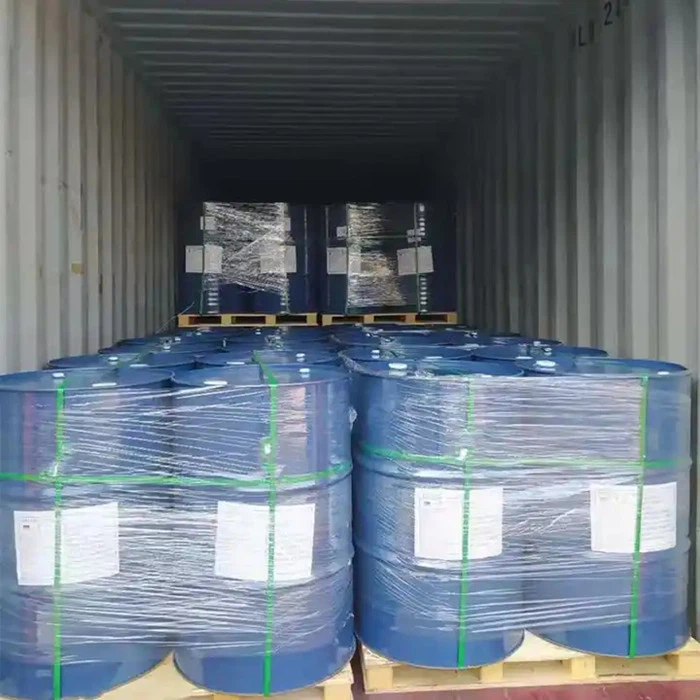
In the case of antifreeze production, knowing how ethylene glycol dissolves in water helps in formulating the right mixture. The fast dissolution in water ensures that the antifreeze can quickly spread throughout the cooling system and provide the necessary protection against freezing and overheating.
Other Related Chemicals
If you're interested in other chemicals, we also supply some related ones. Check out Methyltriethoxysilane / Triethoxymethylsilane CAS 2031 - 67 - 6, Ethylene Glycol Monoethyl Ether 2 - Ethoxyethanol CAS 110 - 80 - 5, and 1 - Ethynyl - 1 - cyclohexanol CAS 78 - 27 - 3. These chemicals also have their own unique properties and applications.
Conclusion
In conclusion, the dissolution rate of ethylene glycol (CAS 110 - 63 - 4) varies greatly depending on the solvent. Polar solvents like water and ethanol allow for fast dissolution, while non - polar solvents like hexane make it difficult for ethylene glycol to dissolve. Understanding these dissolution rates is essential for various industrial applications.
If you're in the market for ethylene glycol or any of the related chemicals I mentioned, don't hesitate to reach out. We're here to provide high - quality products and can offer professional advice on their use. Whether you're a small - scale manufacturer or a large - scale industrial user, we can meet your needs. Contact us to start a purchase negotiation, and let's work together to get the best solutions for your projects.
References
- Atkins, P., & de Paula, J. (2006). Physical Chemistry. Oxford University Press.
- Morrison, R. T., & Boyd, R. N. (1992). Organic Chemistry. Prentice - Hall.


