Hey there! As a supplier of dimethyl malonate, I've been getting a lot of questions about the reaction conditions between dimethyl malonate and ketones. So, I thought I'd share some insights on this topic.

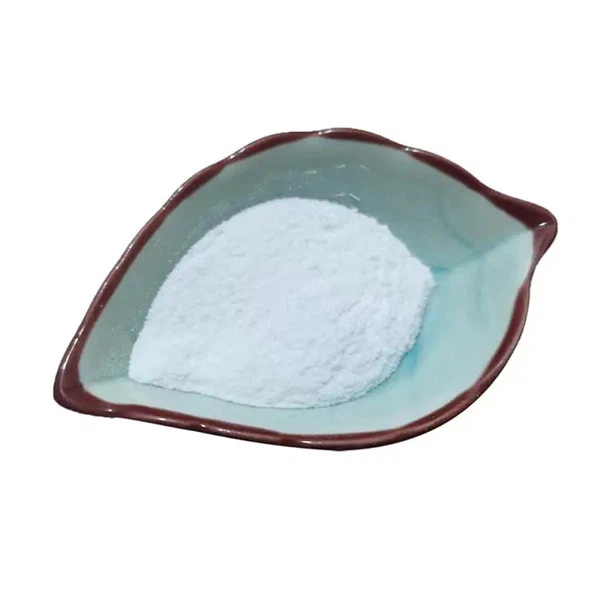
First off, let's talk a bit about dimethyl malonate. It's a super useful organic compound with the chemical formula C₅H₈O₄. You can find it in a bunch of chemical reactions, especially those involving the formation of carbon - carbon bonds. And ketones, well, they are organic compounds that have a carbonyl group (C = O) bonded to two carbon atoms.
General Reaction Mechanism
The reaction between dimethyl malonate and ketones is often a Knoevenagel condensation. In this reaction, the α - hydrogen atoms of dimethyl malonate are acidic due to the electron - withdrawing effect of the two ester groups. A base can deprotonate these α - hydrogens, forming an enolate ion. This enolate ion then attacks the carbonyl carbon of the ketone, followed by dehydration to form an α,β - unsaturated compound.
Reaction Conditions
1. Solvent
The choice of solvent plays a crucial role. Polar aprotic solvents like dimethylformamide (DMF) or dimethyl sulfoxide (DMSO) are often preferred. They can dissolve both dimethyl malonate and the ketone well and also stabilize the enolate ion formed during the reaction. For example, DMF has a high dielectric constant, which helps in separating the ions in solution and facilitating the reaction.
2. Base
A base is necessary to deprotonate the α - hydrogens of dimethyl malonate. Weak bases like piperidine or pyridine are commonly used. Piperidine is a great choice because it can act as a catalyst and also participate in the reaction mechanism. It's not too strong to cause side reactions but strong enough to generate the enolate ion. The base is usually added in catalytic amounts, typically around 5 - 10 mol% relative to the dimethyl malonate.
3. Temperature
The reaction temperature depends on the reactivity of the ketone. For less reactive ketones, a higher temperature is required. Usually, the reaction can be carried out at reflux temperature, which might range from 80 - 120°C depending on the solvent used. At higher temperatures, the reaction rate increases, but you also need to be careful as side reactions might occur more readily.
4. Reaction Time
The reaction time can vary from a few hours to several days. It depends on factors like the reactivity of the ketone, the concentration of the reactants, and the temperature. For more reactive ketones, the reaction might be completed in 2 - 3 hours, while for less reactive ones, it could take up to 24 hours or more.
Examples of Reactions with Different Ketones
Acetone
When reacting dimethyl malonate with acetone, the reaction is relatively fast. Using piperidine as a base in ethanol as a solvent at reflux temperature (around 78°C), the reaction can be completed in about 4 - 6 hours. The product formed is an α,β - unsaturated diester.
Cyclohexanone
Cyclohexanone is a bit less reactive than acetone. In a DMF solvent with piperidine as the base at a temperature of around 100 - 110°C, the reaction might take 12 - 18 hours to reach a good conversion.
Other Considerations
1. Purity of Reactants
The purity of dimethyl malonate and the ketone is very important. Impurities can interfere with the reaction, reduce the yield, or cause side reactions. So, it's always a good idea to use high - purity reactants.
2. Stoichiometry
The stoichiometry of the reaction is usually 1:1 between dimethyl malonate and the ketone. However, in some cases, a slight excess of dimethyl malonate (say, 1.1 equivalents) can be used to ensure complete reaction of the ketone.
If you're into other organic chemicals, we also supply Benzyl Butyl Phthalate BBP CAS 85 - 68 - 7, 4 - Formylbenzoic Acid CAS 619 - 66 - 9, and 1,2 - Diphenoxyethane/DPE/Ethylene Glycol Diphenyl Ether CAS 104 - 66 - 5. These chemicals have their own unique applications and reaction conditions.
Scaling up the Reaction
If you're thinking about scaling up the reaction from a lab - scale to an industrial - scale, you need to be extra careful. The heat transfer and mixing become more challenging. You might need to adjust the reaction conditions, such as the addition rate of the reactants and the stirring speed. Also, safety precautions are of utmost importance, especially when dealing with large amounts of solvents and bases.
Yield and Optimization
The yield of the reaction between dimethyl malonate and ketones can vary. Factors like the reaction conditions, purity of reactants, and the structure of the ketone can affect the yield. To optimize the yield, you can try different bases, solvents, and reaction temperatures. For example, if you find that the reaction is not going to completion, you can try increasing the reaction time or the amount of the base slightly.
Conclusion
The reaction between dimethyl malonate and ketones is a useful synthetic method for making α,β - unsaturated compounds. By carefully controlling the reaction conditions such as solvent, base, temperature, and reaction time, you can achieve good yields. If you're interested in purchasing dimethyl malonate or have any questions about the reaction conditions, feel free to reach out for a procurement discussion.
References
- March, J. Advanced Organic Chemistry: Reactions, Mechanisms, and Structure. Wiley, 2007.
- Carey, F. A., & Sundberg, R. J. Advanced Organic Chemistry, Part B: Reactions and Synthesis. Springer, 2007.