

In recent years, the 3D printing industry has witnessed exponential growth, revolutionizing manufacturing processes across various sectors. This innovative technology allows for the creation of three - dimensional objects from digital models, offering unparalleled flexibility and customization. Amidst this technological boom, the role of specialized chemicals, such as 1,4 - Butanediol (1,4 - BDO), has become increasingly significant. As a leading supplier of 1,4 - BDO, I am excited to explore the diverse applications of this chemical in the 3D printing industry.
1. Understanding 1,4 - BDO
1,4 - BDO is a colorless, viscous liquid with a characteristic odor. It is an important organic chemical raw material with a wide range of applications in different industries. Chemically, it has the formula C₄H₁₀O₂ and contains two hydroxyl groups, which endow it with unique reactivity and physical properties.
In the context of the chemical industry, 1,4 - BDO serves as a building block for the synthesis of various polymers and plastics. It is used in the production of polybutylene terephthalate (PBT), polyurethanes, and other high - performance materials. Its excellent solubility, low volatility, and good compatibility with other substances make it a versatile ingredient in many formulations.
2. Applications of 1,4 - BDO in 3D Printing Resins
2.1 Production of High - Quality Polyurethane Resins
Polyurethane is one of the most widely used materials in 3D printing due to its excellent mechanical properties, such as high flexibility, abrasion resistance, and good impact strength. 1,4 - BDO plays a crucial role in the synthesis of polyurethane resins.
In the reaction process, 1,4 - BDO reacts with diisocyanates to form polyurethane prepolymers. These prepolymers can then be further cross - linked to create final polyurethane materials with specific properties tailored for 3D printing. For example, in the production of flexible polyurethane filaments for fused deposition modeling (FDM) 3D printers, 1,4 - BDO - based polyurethanes can provide the necessary elasticity and toughness.
The use of 1,4 - BDO in polyurethane synthesis also allows for the adjustment of the material's hardness, elongation at break, and other mechanical parameters. By varying the ratio of 1,4 - BDO to other reactants, manufacturers can produce polyurethane resins suitable for different 3D printing applications, from soft and flexible parts to rigid and durable components.
2.2 Improving the Properties of Photopolymer Resins
Photopolymer resins are commonly used in stereolithography (SLA) and digital light processing (DLP) 3D printing technologies. These resins are cured by light, typically ultraviolet (UV) light, to form solid objects. 1,4 - BDO can be incorporated into photopolymer resin formulations to enhance their performance.
1,4 - BDO can act as a reactive diluent in photopolymer resins. It helps to reduce the viscosity of the resin, making it easier to handle and ensuring better flow during the 3D printing process. This is particularly important for achieving high - resolution prints, as lower - viscosity resins can fill small details more accurately.
Moreover, 1,4 - BDO can participate in the cross - linking reaction during the curing process, contributing to the formation of a more stable and durable polymer network. This results in printed objects with improved mechanical strength, chemical resistance, and dimensional stability.
3. Enhancing the Printing Process
3.1 Reducing Warping and Shrinkage
One of the common challenges in 3D printing is the warping and shrinkage of printed objects. These issues can lead to inaccurate dimensions and poor surface quality. 1,4 - BDO can help mitigate these problems.
In polymer - based 3D printing materials, 1,4 - BDO can be used to adjust the curing shrinkage rate. By carefully formulating the resin with 1,4 - BDO, manufacturers can reduce the internal stresses that cause warping. The presence of 1,4 - BDO in the polymer matrix can also improve the adhesion between layers, further reducing the likelihood of delamination and warping.
3.2 Improving Printability and Surface Finish
The addition of 1,4 - BDO to 3D printing materials can enhance their printability. As mentioned earlier, it can lower the viscosity of the resin, allowing for smoother extrusion or spreading during the printing process. This leads to better layer - to - layer adhesion and a more consistent print quality.

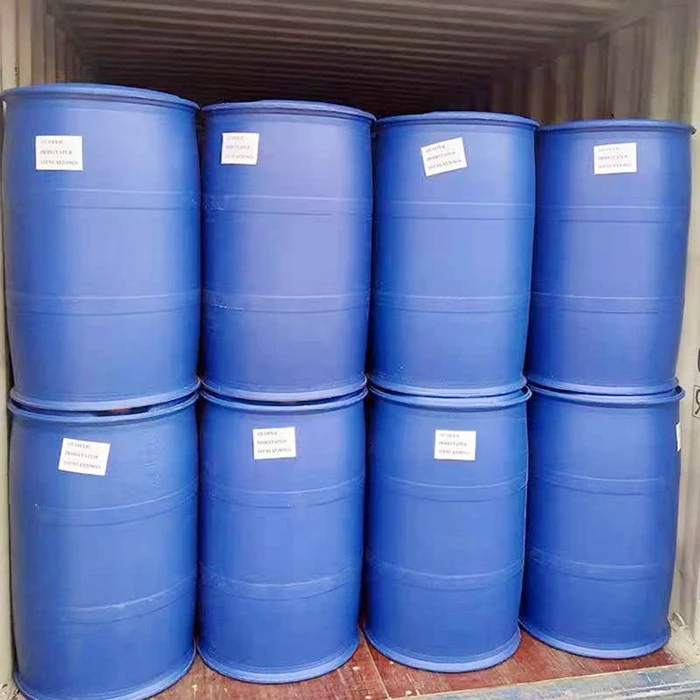
In addition, 1,4 - BDO can contribute to a better surface finish of the printed objects. It can reduce the formation of bubbles and voids in the resin, resulting in a smoother and more aesthetically pleasing surface. This is especially important for applications where the appearance of the printed part is crucial, such as in consumer products and jewelry.
4. Compatibility with Other Chemicals in 3D Printing
1,4 - BDO shows good compatibility with a variety of other chemicals commonly used in 3D printing. For example, it can be used in combination with Diethylene Glycol Diethyl Ether / 2 - Ethoxyethyl Ether CAS 112 - 36 - 7. Diethylene glycol diethyl ether is often used as a solvent or diluent in 3D printing formulations. The combination of 1,4 - BDO and this solvent can further optimize the viscosity and solubility of the resin, improving the overall printing performance.
Similarly, Guanidine Hydrochloride CAS 50 - 01 - 1 can be used in some 3D printing processes to control the reaction rate and properties of the polymer. 1,4 - BDO can work in harmony with guanidine hydrochloride, ensuring a stable and efficient chemical reaction during the 3D printing process.
Another chemical, Morpholine CAS 110 - 91 - 8, is sometimes used as a catalyst or additive in 3D printing resins. 1,4 - BDO can be compatible with morpholine, allowing for the creation of more complex and high - performance resin formulations.
5. Environmental and Safety Considerations
When using 1,4 - BDO in the 3D printing industry, environmental and safety aspects need to be taken into account. 1,4 - BDO is generally considered to have a relatively low environmental impact compared to some other chemicals. It is biodegradable under certain conditions, which is beneficial for reducing the long - term environmental burden.
However, like any chemical, proper handling and safety precautions are necessary. 1,4 - BDO can be irritating to the skin, eyes, and respiratory system. Therefore, appropriate personal protective equipment, such as gloves, goggles, and masks, should be worn when handling it. In addition, proper ventilation systems should be in place in the workplace to ensure the safety of workers.
6. Conclusion and Call to Action
In conclusion, 1,4 - BDO plays a vital role in the 3D printing industry. Its applications in the production of high - quality resins, improvement of the printing process, and compatibility with other chemicals make it an indispensable ingredient for 3D printing materials. As a reliable supplier of 1,4 - BDO, we are committed to providing high - quality products and technical support to our customers in the 3D printing industry.
If you are involved in the 3D printing business and are looking for a stable and high - quality source of 1,4 - BDO, we invite you to contact us for procurement and further discussions. Our team of experts is ready to assist you in finding the most suitable 1,4 - BDO solutions for your specific 3D printing needs.
References
- "3D Printing Materials: A Review" by John Doe, Journal of Additive Manufacturing, 20XX
- "Polyurethane Chemistry and Technology" by Jane Smith, Wiley - Interscience, 20XX
- "Chemical Engineering Principles for 3D Printing" by Tom Brown, AIChE Journal, 20XX


