




Products Description
Product Name: Tributylphosphine
CAS: 998-40-3
EINECS: 213-651-2
Melting point: -65 °C
Boiling point: 150 °C
Density: 0.81 g/mL
Refractive index: n20/D 1.462
Specification
| Items | Specifications |
| Appearance | Colorless and transparent liquid |
| Purity | ≥99% |
| Water | ≤0.1% |
Application
1. Tributylphosphine CAS 998-40-3 is widely used as a ligand in transition metal complexes for homogeneous catalysis, including olefin polymerization and hydroformylation reactions . Tributylphosphine serves as an uncharged reducing agent for cleaving disulfide bonds in proteins, particularly in proteomics research for sample preparation prior to electrophoresis .
2. The compound functions as a versatile catalyst in organic synthesis, including 1,4-addition reactions, acylation, thioetherification of alcohols with disulfides, and preparation of active esters .Tributylphosphine is also used in the nuclear industry as a metal extractant for uranium and plutonium .
3. Applications of Tributylphosphine extend to its use as a flame retardant additive in plastics and coatings, a phase transfer catalyst intermediate, and a polymerization cross-linking catalyst .
Storage and Precautions
1. Store Tributylphosphine CAS 998-40-3 in a tightly sealed container under an inert atmosphere (argon or nitrogen) in a cool, dry, and well-ventilated place, protected from light and moisture . Storage at room temperature in a cool, dark place is acceptable for pure material, though some solutions require refrigeration .
2. Keep Tributylphosphine strictly away from air, moisture, strong oxidizing agents, acids, and halogens due to its pyrophoric nature and reactivity . Tributylphosphine may ignite spontaneously on contact with air and reacts vigorously with oxidizers.
3. Always Tributylphosphine use appropriate personal protective equipment (PPE) including chemical-resistant gloves (nitrile/neoprene), tightly fitting safety goggles, face shield, and flame-retardant antistatic protective clothing . Handle Tributylphosphine only in a fume hood with inert atmosphere and use spark-proof, explosion-proof equipment.
Emergency response to leakage
1. Immediately isolate the spill area (at least 50 meters), evacuate all personnel, and eliminate all ignition sources. DO NOT use combustible materials like paper towels for cleanup . Absolutely avoid contact with air and water.
2. Contain Tributylphosphine using dry, inert, non-combustible absorbent material (dry sand, vermiculite) under inert atmosphere if possible. Carefully collect the contaminated material using non-sparking tools into a sealed, corrosion-resistant chemical waste container purged with inert gas .
3. Personnel Tributylphosphine must wear full chemical-protective equipment including positive pressure self-contained breathing apparatus (SCBA) during cleanup . Prevent entry into drains or waterways and dispose of all waste according to hazardous material regulations. Tributylphosphine is classified for transport.
Safety Information
1. Tributylphosphine CAS 998-40-3 is classified as a pyrophoric liquid (H250, Danger) that catches fire spontaneously if exposed to air, and is corrosive causing severe skin burns and serious eye damage (H314/H318) . It is flammable with flash points reported from 58°C to 106°C depending on conditions .
2. Tributylphosphine is harmful if swallowed (H302), in contact with skin (H312), and may cause respiratory irritation (H335) . It has an acute oral LD50 of approximately 750-820 mg/kg in rats . Thermal decomposition produces highly toxic fumes including phosphine and oxides of phosphorus .
3. Tributylphosphine is toxic to aquatic life with long-lasting effects (H411) . It has an unpleasant odor and requires handling under inert atmosphere to prevent oxidation to tributylphosphine oxide . Always consult the specific Safety Data Sheet (SDS) for Tributylphosphine for complete hazard information, first-aid procedures, and mandatory handling protocols .
Recommended Products
| Items | Product Name |
| 1 | Pinacol CAS 76-09-5 |
| 2 | 1-chlorododecane CAS 112-52-7 |
| 3 | Hexamethyldisiloxane CAS 107-46-0 |
| 4 | Isooctyl Thioglycolate CAS 25103-09-7 |
| 5 | Tannic Acid CAS 1401-55-4 |
| 6 | 2-Chloro-2-methylpropane CAS 507-20-0 |
| 7 | 1-Chlorotetradecane CAS 2425-54-9 |
| 8 | Ethyl Gallate CAS 831-61-8 |
| 9 | 1-Chlorohexadecane CAS 4860-03-1 |
| 10 | If you want to need more information,welcome to contact us at any time.
WhatsApp: +86 18317156592
|
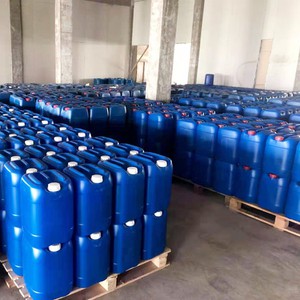
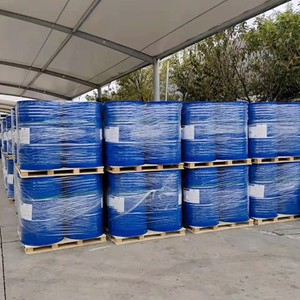
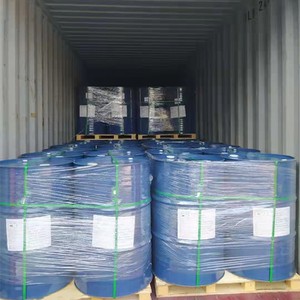
Packaging

Transportation & Payment

About Transportation
Depending on the requirements of our clients, we can give a variety of transportation options.
For smaller orders, we offer air shipping or international courier services like FedEx, DHL, TNT, EMS, and numerous other unique lines of international transit.
We can transport by sea to a specified port for bigger amounts.
Additionally, we can offer unique services based on the requirements of our clients and the characteristics of their goods.

* We can offer a range of payment options to our clients.
* When the sum is modest, clients typically pay with PayPal, Western Union, Alibaba, and other similar services.
* When the sum is significant, clients typically pay with T/T, L/C at sight, Alibaba, and so on.
* Furthermore, an increasing number of consumers will use Alipay or WeChat Pay to make payments.
FAQ
1
May I get any sample from you?
Re: Yes, of course, we'd like to provide sample to you according to your demands.
2
What is your MOQ?
Re: Usually our MOQ is 1 kg, but sometimes it is also flexible and depends on different products.
3
How long I can get my goods after payment?
Re: If shipped by couriers or air, it usually cost 5-10 days.
If shipped by sea, it usually cost 3-40 days, which depends on your destination.
4
Do you have any after-sales service?
Re: Yes, we will inform you progress of the order, such as product preparation, declaration, transportation follow-up, customs clearance assistance, technical guidance, etc.
Contact Us
Hot Tags: tributylphosphine cas 998-40-3, China tributylphosphine cas 998-40-3 manufacturers, suppliers, factory, Ethyl acrylate CAS 140 88 5, organic chemical functionalization, organic chemical packaging, organic chemical recycling agent, CAS 3290 92 4, CAS 1119 40 0


