Hey there! As a succinic acid supplier, I often get asked about the acid dissociation constant of succinic acid. So, let's dive right into it and break down what this is all about.
What's an Acid Dissociation Constant Anyway?
First off, the acid dissociation constant, usually written as (K_a), is a measure of how much an acid dissociates in a solution. In simple terms, it tells us how easily an acid can release a hydrogen ion ((H^+)) when it's dissolved in water.
For a general acid (HA), the dissociation in water can be represented by the equation: (HA \rightleftharpoons H^+ + A^-). The (K_a) expression for this reaction is (K_a=\frac{[H^+][A^-]}{[HA]}), where ([H^+]), ([A^-]), and ([HA]) are the molar concentrations of hydrogen ions, the conjugate base, and the undissociated acid, respectively.
Succinic Acid and Its Dissociation
Succinic acid has the chemical formula ((CH_2)_2(COOH)_2). It's a dicarboxylic acid, which means it has two carboxyl groups ((-COOH)). Each of these carboxyl groups can donate a proton ((H^+)), so succinic acid dissociates in two steps.
The first dissociation step is:
((CH_2)_2(COOH)2 \rightleftharpoons (CH_2)2(COOH)(COO^-) + H^+)
The acid dissociation constant for this step, denoted as (K{a1}), is approximately (6.21\times 10^{-5}) at (25^{\circ}C). This value tells us that succinic acid is a weak acid because the (K{a1}) is relatively small. A small (K_a) means that only a small fraction of the succinic acid molecules will dissociate into ions in solution.
The second dissociation step is:
((CH_2)_2(COOH)(COO^-) \rightleftharpoons (CH_2)_2(COO^-)2 + H^+)
The acid dissociation constant for this step, (K{a2}), is much smaller, around (2.31\times 10^{-6}) at (25^{\circ}C). This is because it's harder to remove a proton from a negatively charged species ((CH_2)_2(COOH)(COO^-)) compared to the neutral succinic acid molecule ((CH_2)_2(COOH)_2).
Why Does the Acid Dissociation Constant Matter?
The (K_a) values of succinic acid are important for several reasons. In the field of chemistry, they help us understand the chemical behavior of succinic acid in different solutions. For example, if you're working on a synthesis reaction that involves succinic acid, knowing its (K_a) values can help you predict how it will react with other substances and what conditions (like pH) are optimal for the reaction.
In industries, succinic acid is used in various applications. It's used in the food industry as an acidity regulator, in the pharmaceutical industry for drug formulation, and in the production of biodegradable polymers. The (K_a) values play a crucial role in these applications. For instance, in food products, the (K_a) values determine how succinic acid will affect the pH and taste of the food.
Our Succinic Acid Offerings
As a succinic acid supplier, we take pride in providing high - quality succinic acid. Our product meets strict quality standards, ensuring that you get a pure and reliable form of succinic acid for your needs. Whether you're in the food, pharmaceutical, or polymer industry, our succinic acid can be a great choice for your applications.

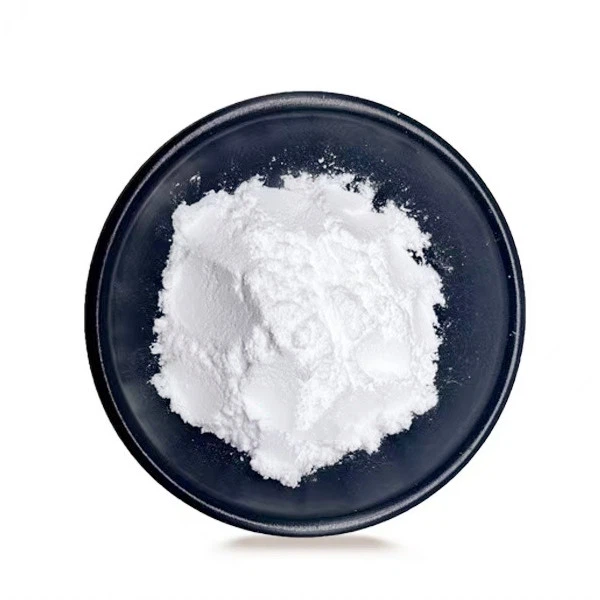
If you're also interested in other organic chemicals, we've got you covered. Check out our Antioxidant 1076/Irganox 1076 CAS 2082 - 79 - 3, which is widely used in the polymer industry to prevent oxidation. We also offer Methyl Acetoacetate MAA CAS 105 - 45 - 3, an important intermediate in the synthesis of various pharmaceuticals and agrochemicals. And for those in need of a silane coupling agent, our 3 - Glycidoxypropyltrimethoxysilane/KH - 560 CAS 2530 - 83 - 8 is a top - notch product.
How to Use the Acid Dissociation Constant in Your Work
Let's say you're a chemist in a lab, and you're trying to prepare a buffer solution using succinic acid. The Henderson - Hasselbalch equation, (pH = pK_a+\log\frac{[A^-]}{[HA]}), can be very useful here. The (pK_a) is the negative logarithm of the (K_a) value ((pK_a =-\log K_a)). For the first dissociation of succinic acid, (pK_{a1}=-\log(6.21\times 10^{-5})\approx 4.21).
By adjusting the ratio of the conjugate base ((CH_2)_2(COOH)(COO^-)) to the undissociated acid ((CH_2)_2(COOH)_2), you can prepare a buffer solution with a specific pH around 4.21. This buffer can be used in various experiments where a stable pH is required.
Factors Affecting the Acid Dissociation Constant
The (K_a) values of succinic acid are not fixed and can be affected by several factors. Temperature is one of the most important factors. As the temperature increases, the (K_a) values generally increase. This is because the dissociation of an acid is an endothermic process, and according to Le Chatelier's principle, increasing the temperature will shift the equilibrium towards the products (dissociated ions).
The ionic strength of the solution can also affect the (K_a) values. In solutions with high ionic strength, the activity coefficients of the ions change, which in turn affects the effective concentrations of the species involved in the dissociation reaction.
Contact Us for Your Succinic Acid Needs
If you're looking for a reliable succinic acid supplier, we'd love to hear from you. Whether you need a small sample for testing or a large - scale supply for your production, we can accommodate your requirements. Contact us to start a discussion about your needs and let's work together to find the best succinic acid solution for you.
References
- Atkins, P., & de Paula, J. (2014). Physical Chemistry. Oxford University Press.
- McMurry, J. (2015). Organic Chemistry. Cengage Learning.